
How to install beetle path lights solar powered?
 Sam VasquezBuying Guide Lead
October 20, 2026 — To install Solar Beetle Swinging Lights along a pathway, you must secure the ground stakes in soft soil with the solar panels oriented toward direct southern exposure to ensure a full six-hour charge cycle.
Homeowners seeking a balance between whimsical aesthetics and functional safety often choose these fixtures to define borders without the complexity of high-voltage wiring. Setting up a perimeter that reacts to the wind requires careful spacing to prevent the swaying beetle heads from colliding while maintaining a continuous visual guide for foot traffic.
Where should you place Solar Beetle Swinging Lights?
You should place Solar Beetle Swinging Lights in areas that receive at least six to eight hours of unobstructed sunlight daily to ensure the internal batteries reach peak capacity. If you're on a budget, you might be tempted to place them under heavy foliage to save on quantity, but this will result in dim performance by midnight. According to VOLT Lighting, professional-grade solar path lights typically provide up to 6 hours of illumination on a full charge, a benchmark these beetle lights aim to meet by utilizing high-efficiency monocrystalline panels. I recommend spacing each stake approximately three to four feet apart; this provides enough clearance for the "swinging" mechanism to move freely in the breeze without tangling. Skip this if your garden is primarily shaded by a dense canopy or north-facing walls, as the beetles will fail to store enough energy to trigger the dusk sensors.
How do you secure beetle path lights in hard soil?
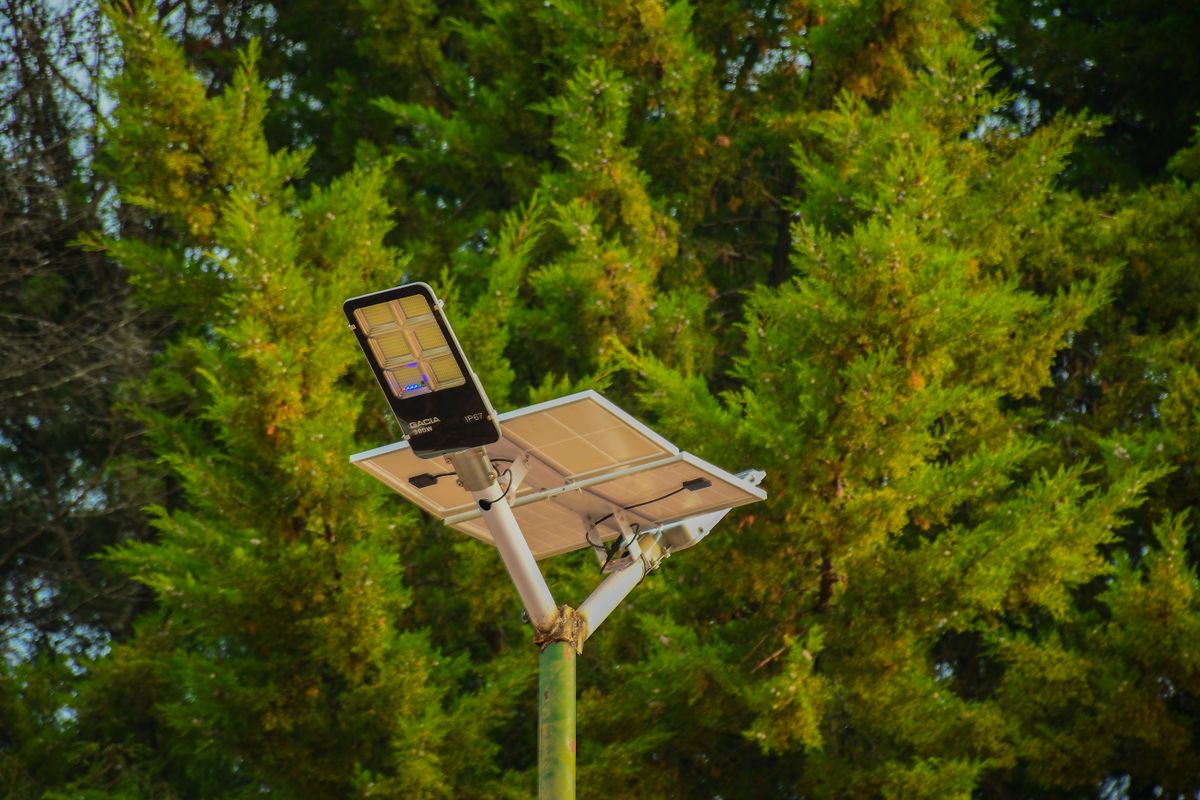
Photo by finix photographer on Pexels
To secure the lights in compacted or dry soil, you must pre-moisten the ground or use a pilot hole tool to avoid snapping the plastic or metal stakes during insertion. Between these two methods, I'd go with pre-moistening the soil for 15 minutes because it creates a tighter grip around the stake once the dirt dries and settles. While some decorative lights found on Etsy feature multiple glowing orbs and waterproof pathway ratings, the structural integrity of the stake is what determines if the light remains upright during wind gusts. If the ground is too rocky, I suggest using a small masonry drill bit to create a guide hole rather than applying downward pressure on the beetle head, which can damage the internal wiring. Here's what I'd actually buy for a standard walkway: a set of six Solar Beetle Swinging Lights positioned in a staggered formation, which mimics natural insect movement more effectively than a straight, rigid line.
Quick answers
Q: How long do these lights stay illuminated at night? A: When the 600mAh battery is fully charged by 8 hours of sunlight, the lights typically stay active for 6 to 10 hours depending on the ambient temperature.
Q: Can the beetle lights withstand heavy rain or snow? A: Solar Beetle Swinging Lights are built with an IP65 waterproof rating, meaning they are protected against low-pressure water jets and environmental moisture.
Q: What is the ideal spacing for a 20-foot garden path? A: For a 20-foot path, I recommend using 5 to 7 individual stakes to ensure there are no dark gaps while allowing the swaying heads enough room to move.
For more detailed technical specs, read the Solar Beetle Swinging Lights Performance Evaluation. If you are looking for design inspiration, see our guide on Integrating Solar Beetle Swinging Lights into Modern Gardens. To understand the mechanics behind the movement, check out How do Solar Beetle Swinging Lights work in the garden?.
Learn more about Solar Beetle Swinging Lights at https://solyrabeetle.com.
Sources

Photo by Gorma Kuma on Pexels
- Solar Lights - Solar Powered Outdoor Lights | VOLT® Lighting
- Bug Solar Garden Light - Etsy
- The Best Solar Path Lights of 2026: Tested To Find the Perfect Glow