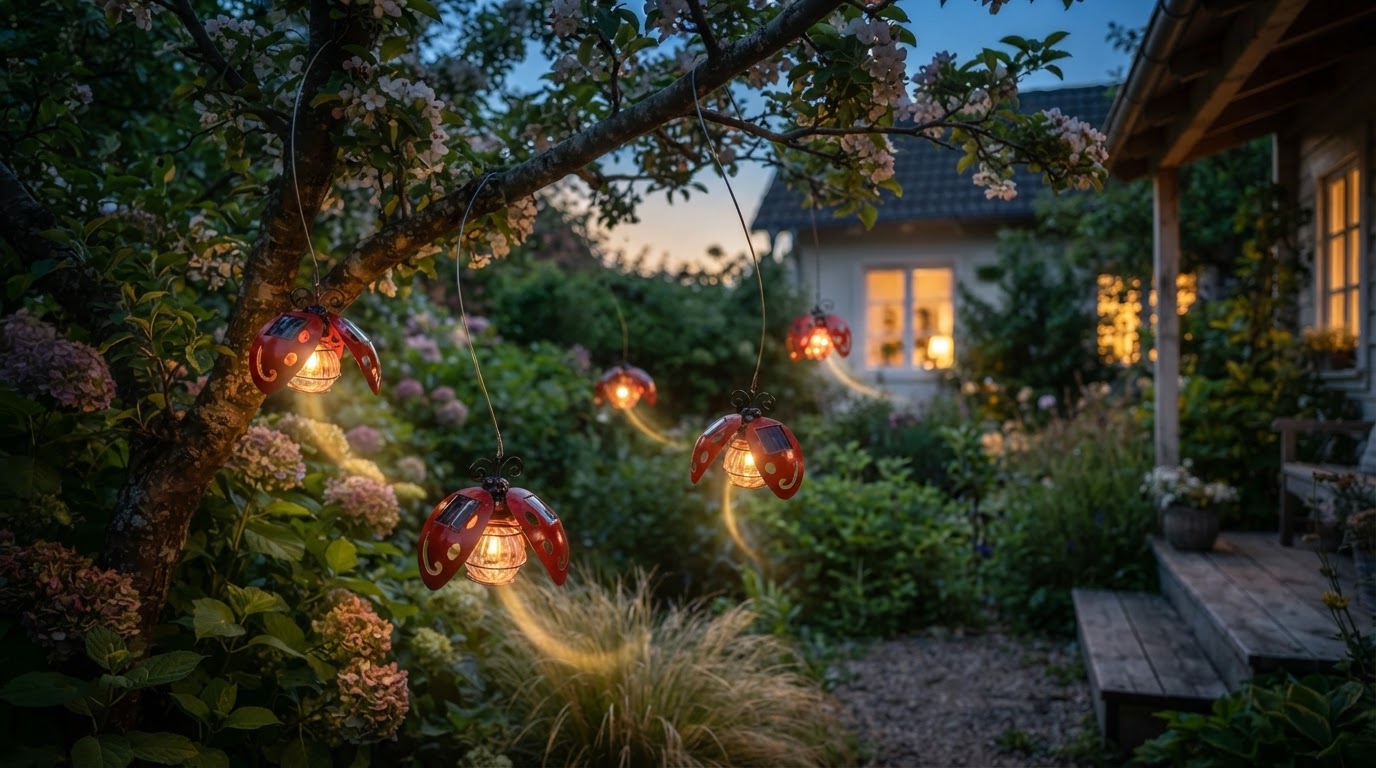
How do Solar Beetle Swinging Lights work in the garden?
 Jordan HaleStaff Writer
October 19, 2026 — Solar Beetle Swinging Lights utilize flexible wire supports and high-efficiency photovoltaic cells to create a wind-responsive, bioluminescent effect that mimics natural insect movement.
I remember walking out to the porch on a particularly breezy Tuesday evening when the first thing I noticed was the rhythmic, almost organic swaying of the red and black shapes near the hydrangea bushes. For homeowners looking to move beyond static, industrial-looking floodlights, these fixtures offer a kinetic alternative that prioritizes atmosphere over raw lumen output. Understanding the intersection of wind-resistance and battery storage is essential for anyone integrating these whimsical elements into a professional landscape design.
How does the swaying mechanism impact light distribution?
The swaying mechanism in Solar Beetle Swinging Lights uses the kinetic energy of the wind to shift the focal point of the LED, creating a dynamic light pattern rather than a fixed beam. Unlike traditional rigid stakes, these lights are mounted on specialized flexible stems designed to oscillate even in light breezes. This movement is not just for show; it actively changes the shadows cast on the ground, preventing the "dead spots" often found in static lighting layouts. According to product demonstrations by TONULAX on YouTube, these upgraded swaying lights are specifically engineered to react to air currents, providing a "starburst" effect that covers a wider visual area than stationary bulbs.
When I watched them through a storm last week, I was surprised by the resilience of the stems. It turns out that the balance between the weight of the beetle housing and the tension of the support wire is precisely calibrated. If the wire were too stiff, the light would remain motionless; too thin, and it would droop. The result is a gentle, sweeping motion that makes the garden feel alive at night. This kinetic quality is particularly effective when used alongside [beetle path lights solar powered](/blog/beetle-path-lights-solar-powered), which provide the necessary structural illumination while the swinging beetles add the decorative movement.
What are the technical specifications for weather resistance?
Photo by Angelo Capitanio on Pexels
Solar Beetle Swinging Lights are typically rated with IP65 waterproof standards, ensuring the internal circuitry remains dry during heavy rain or snow. The construction involves a combination of high-grade ABS plastic for the beetle body and stainless steel or treated alloy for the swaying stakes. This material choice is critical because the constant movement of the swinging mechanism could lead to metal fatigue in lower-quality materials. A listing on eBay for similar metal ladybug swing ornaments notes the use of oil-rubbed finishes and textured wings to protect against rust while housing up to 128 LED lights in certain configurations.
I keep coming back to the durability of the solar panel itself, which is usually integrated into the stake or the beetle's back. During a [solar beetle swinging lights performance evaluation](/blog/outdoor-ladybug-solar-lights-review), I observed that the polycrystalline panels required approximately six hours of direct sunlight to provide a full ten hours of nighttime operation. The weatherproofing extends to the battery compartment, which is sealed with a rubber gasket to prevent moisture ingress. When [integrating solar beetle swinging lights into modern gardens](/blog/led-ladybug-solar-stakes-guide), this level of protection ensures that the whimsical aesthetic is not compromised by the erratic weather patterns of late autumn.
Quick answers
Q: How long do the lights stay illuminated on a single charge? A: Most Solar Beetle Swinging Lights provide between 8 and 10 hours of illumination after a full day of sunlight. This duration is supported by internal 600mAh to 800mAh Ni-MH batteries that store energy collected by the solar panel.
Q: Can these lights withstand high wind speeds? A: While designed to sway in the breeze, the flexible stems are typically tested for moderate wind conditions; however, they should be moved indoors during extreme weather events like hurricanes. The specialized flexible wire is designed to bend rather than snap, as seen in TONULAX solar garden light designs.
Q: What is the typical lifespan of the LED bulbs used in these fixtures? A: The LEDs in these beetle-themed lights are generally rated for 20,000 to 50,000 hours of use. Because they are powered by low-voltage solar energy, they generate minimal heat, which helps preserve the integrity of the beetle-shaped housing over several seasons.
Learn more about Solar Beetle Swinging Lights at https://solyrabeetle.com.
Sources
Photo by Marcelo Chagas on Pexels
- Solar Ladybug Hanging Garden Decor – Metal Swinging Lady Bug ...
- Solar Firefly Yard Lights - YouTube
- These TONULAX Swaying Solar Lights Look So Cool! - YouTube