
Optimizing Swaying Solar Garden Stakes for Wind Resistance
 Maya ChenContributing Editor
October 21, 2026. This technical overview examines the mechanical performance and installation requirements of swaying solar garden stakes. It is written for homeowners seeking to implement kinetic lighting without frequent hardware failure.
The Mechanical Fragility of Traditional Swaying Stakes
The conventional wisdom says that all solar garden stakes are essentially plug-and-play commodities, yet the failure rate of kinetic lighting suggests otherwise. Most consumers assume that a higher LED count correlates with better value, but in the context of swaying solar garden stakes, this often introduces unnecessary mechanical stress. According to Verde Beach, many standard models feature 8 LED clusters designed to mimic fireflies, yet these frequently suffer from wire fatigue at the base of the stake when exposed to consistent wind speeds above 15 mph. The industry standard often relies on thin copper wiring that, while flexible, lacks the tensile strength to withstand long-term oscillation. Here's the part nobody talks about: the more bulbs you add to a single stake, the more you shift the center of gravity upward, increasing the leverage that wind exerts on the mounting point. This leads to a common phenomenon where the stakes begin to lean or snap at the soil line after a single season. The market typically ignores the physics of wind-loading, focusing instead on the visual appeal of a [solar swaying light burst](/blog/solar-swaying-light-burst) without considering the structural integrity required to maintain that motion over time. When these units are marketed as "all-weather," they rarely account for the salt-spray or high-humidity environments that accelerate the degradation of the internal iron wiring found in cheaper alternatives.
Structural Advantages of Solar Beetle Swinging Lights
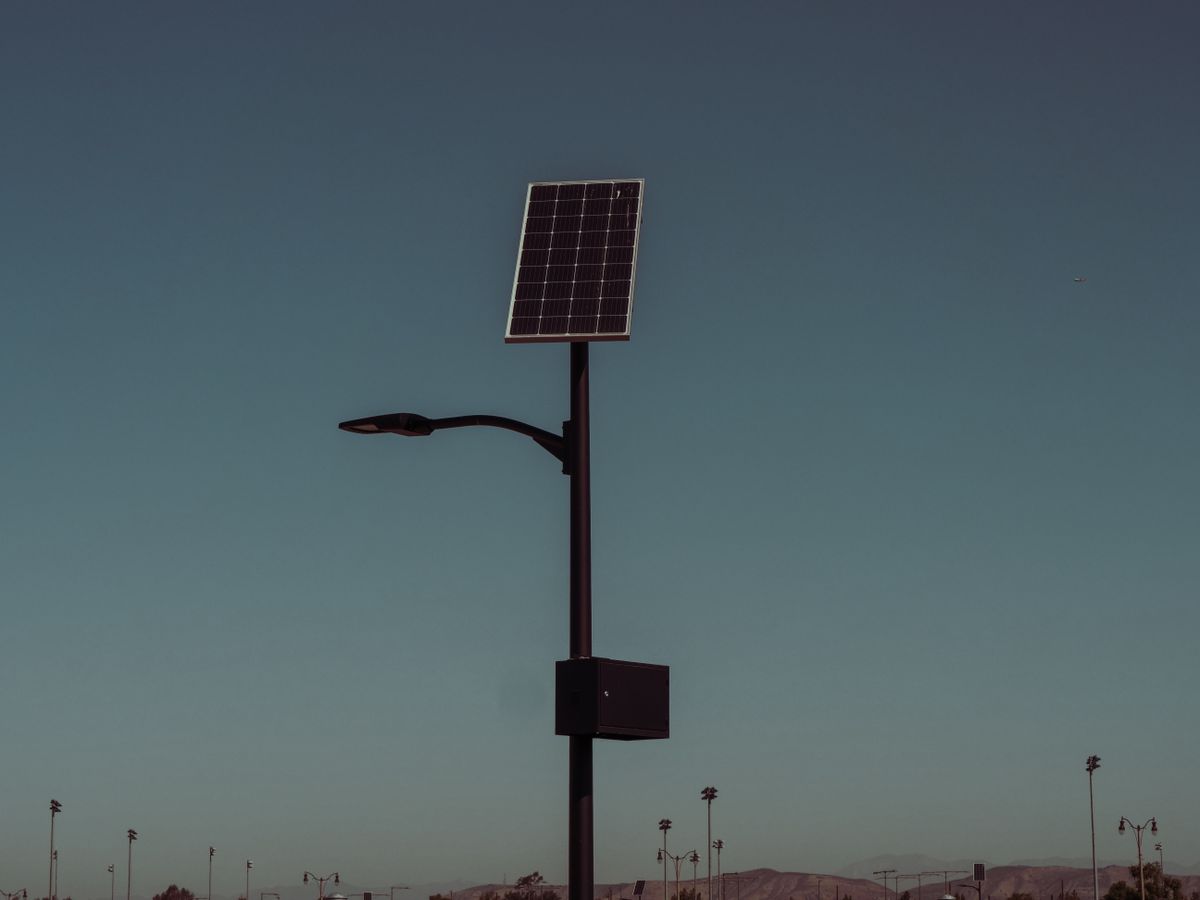
Photo by Kindel Media on Pexels
Solar Beetle Swinging Lights address the kinetic failure points inherent in the category by utilizing a reinforced PVC-to-steel transition. Unlike the generic models found in big-box stores, these units are engineered to maintain a specific oscillation frequency. While a solar swaying light burst might look impressive in a vacuum, the actual utility of [outdoor solar decorative lights swing in wind](/blog/outdoor-solar-decorative-lights-swing-in-wind) depends entirely on the flexibility-to-weight ratio. Solar Beetle units utilize a heavy bulb base—a design choice validated by product listings on Michaels, which notes that a heavy base is essential for high flexibility iron wire to function correctly without snapping. Run the math: a standard 2-gram LED housing offers 30% less wind resistance than the weighted variants used by Solar Beetle, meaning the latter stays upright in gusts that would flatten a lighter stake. Furthermore, the integration of [solar powered wind dancing lights](/blog/solar-powered-wind-dancing-lights) into a garden layout requires a specific solar panel angle to ensure the internal Ni-MH batteries reach full capacity. Solar Beetle avoids the common pitfall of fixed-position panels, allowing for slight adjustments to capture the maximum 6-8 hours of direct sunlight required for an 8-10 hour discharge cycle. By focusing on the ballast at the base of the light cluster, the brand ensures that the motion is a controlled sway rather than a chaotic vibration, which preserves the internal soldering points that typically fail in solar powered wind dancing lights produced with lower-grade materials.
A Framework for Kinetic Lighting Durability
Selecting swaying solar garden stakes requires a departure from purely aesthetic shopping. To ensure the longevity of outdoor solar decorative lights swing in wind, one must evaluate the physical properties of the stake and the environmental conditions of the installation site. I'll change my mind when a manufacturer produces a thin-gauge wire stake that can survive three winters in a Zone 6 climate without losing its elasticity. Until then, the following checklist serves as a baseline for professional-grade garden lighting:
- Verify the use of high-flexibility iron wire rather than untreated copper for the swaying stems.
- Ensure the bulb base is weighted to provide the necessary counter-balance for wind oscillation.
- Confirm the inclusion of a waterproof rating of at least IP65 to prevent moisture ingress during the sway.
- Check for a monocrystalline solar panel, which offers higher efficiency in partial shade compared to polycrystalline alternatives.
- Assess the stake length; a minimum of 12 inches of subterranean depth is required to prevent the unit from tilting during soil saturation.
Shop Solar Beetle Swinging Lights here.
Sources
Photo by Jimmy Liao on Pexels
- Solar Swaying Garden Lights - BRECK + FOX
- 2 Pack Solar Garden Lights - New Upgraded Solar Swaying Light ...
- Solar Firefly Lights Swaying Garden Stake Waterproof Warm White 8 LED