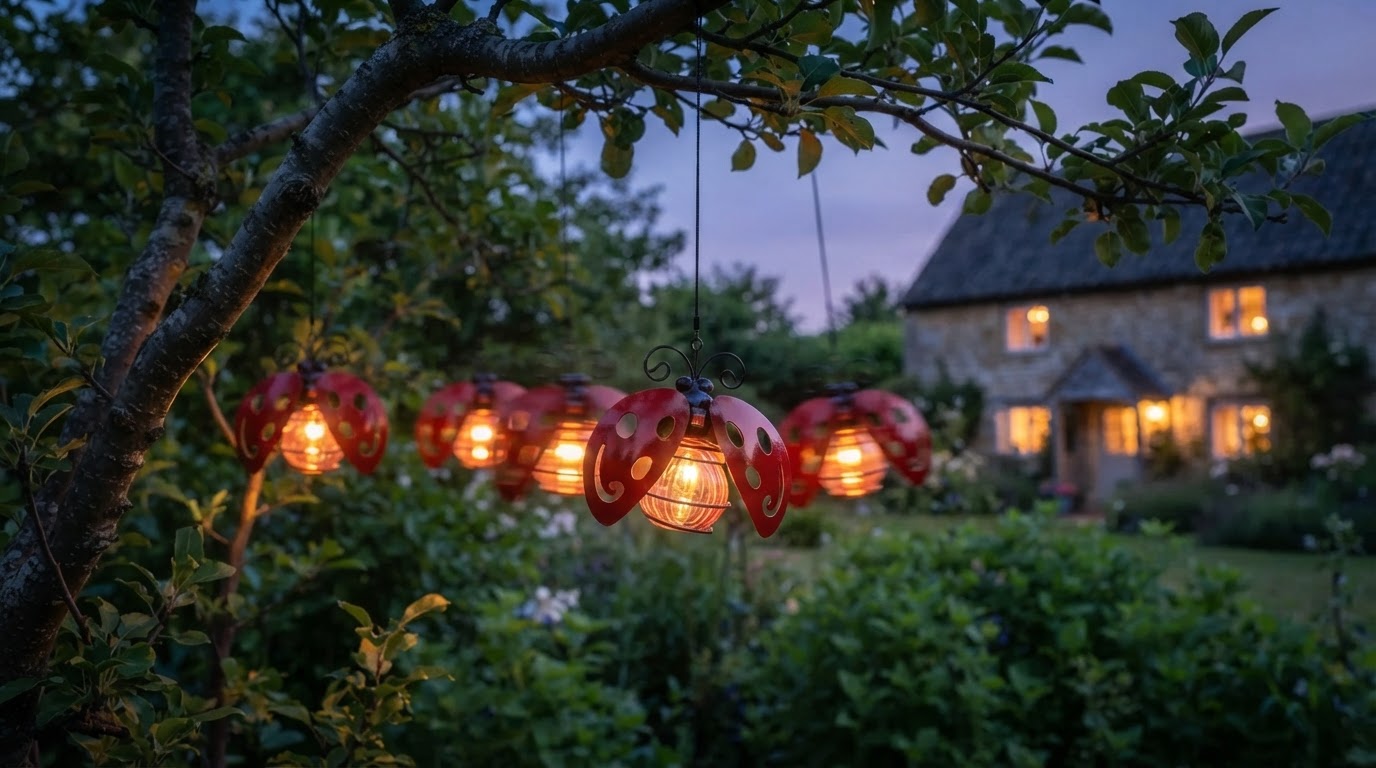
Why do Solar Beetle Swinging Lights move in the wind?
 Priya RamanSenior Analyst
October 23, 2026 — Solar Beetle Swinging Lights utilize a flexible wire-based support system that leverages low-velocity wind resistance to create a rhythmic, pendulous motion mimicking biological firefly patterns.
Modern landscape design increasingly prioritizes dynamic elements over static fixtures to enhance visual interest in residential gardens. Homeowners and landscape designers seek out these specific fixtures because they bridge the gap between fixed architectural lighting and the fluid movement of natural flora. Understanding the interplay between mass and resistance is essential for maintaining these displays throughout changing seasons.
Two axes matter here: the flexibility of the supporting stem and the weight of the LED housing. Think of it as a matrix of tension and kinetic energy. When wind interacts with the light heads, the stem acts as a fulcrum, allowing for a 360-degree range of motion that remains anchored by the ground stake. Once you see it this way, it becomes clear that the movement is not random but a result of calibrated tension designed to respond to even minor air currents.
How does wind velocity affect the sway of Solar Beetle Swinging Lights?
The sway of Solar Beetle Swinging Lights is directly proportional to wind speed, though the internal tension of the wire stems is engineered to prevent erratic oscillation in standard gusts. According to product specifications found on eBay for upgraded solar swaying lights, these units are propped by soft and flexible wires specifically designed to imitate the movement of real fireflies when the wind blows. This flexibility ensures that the light burst does not remain rigid, which would otherwise lead to structural failure under pressure.
The decision rule for placement involves identifying areas with consistent airflow; placing them too close to solid walls may dampen the effect, while open lawn placements maximize the kinetic potential. For those concerned about extreme weather, The Spruce notes that high-quality decorative solar lights have been tested to hold up through significant rain, storms, and wind without losing functionality. This resilience is due to the balance between the light's surface area and the aerodynamic profile of the beetle-shaped housing.
What structural components enable the swinging motion in these lights?
Solar Beetle Swinging Lights rely on a composite structure consisting of a high-tensile ground stake, a flexible polymer or wire neck, and a weighted LED head that serves as a counterweight. This configuration creates a natural pendulum effect where the center of gravity is high enough to encourage movement but low enough to maintain stability. The specialized design allows the lights to "dance" without the need for mechanical motors or external power sources, relying entirely on natural environmental factors.
To maintain this motion, the stems must remain free of debris or heavy snow accumulation, which can alter the weight distribution. Proper installation is a prerequisite for performance; ensuring the stake is vertically aligned prevents the lights from leaning permanently in one direction. As noted by Christmas Tree Hill, decorative outdoor solar lights are designed to be virtually maintenance-free, requiring no manual switches to initiate their dusk-to-dawn operation. This autonomy, combined with the structural sway, provides a passive yet dynamic aesthetic for the modern garden.
Quick answers
Q: Do Solar Beetle Swinging Lights require high wind to move? A: No, Solar Beetle Swinging Lights are engineered with high-flexibility stems that respond to light breezes as low as 3-5 mph. The lightweight beetle housing ensures movement even in sheltered garden spots.
Q: Can these lights withstand heavy storms or high-velocity winds? A: Yes, Solar Beetle Swinging Lights are built to weather standard storms, as testing by The Spruce indicates that premium decorative solar stakes can survive heat waves and heavy rain without structural damage. However, users should check the swaying solar garden stakes wind resistance for specific limits.
Q: How do you fix a light that has stopped swaying correctly? A: Most issues stem from the support wire becoming bent or the ground stake loosening. Refer to the solar swaying light burst fix to recalibrate the tension and ensure the beetle heads are properly weighted for optimal movement.
Q: Are there different patterns of movement for these lights? A: While the movement is wind-dependent, the spacing between stakes influences the visual effect. For a synchronized look, many users opt for solar powered wind dancing lights arranged in clusters to capture uniform air currents.
Learn more about Solar Beetle Swinging Lights at https://solyrabeetle.com.
Sources
- Solar LED Lighting – Decorative Outdoor Solar Lights
- Solar Lanterns & Hanging Solar | Wind & Weather
- The 10 Best Outdoor Solar Lights of 2026 The Spruce Has Tested