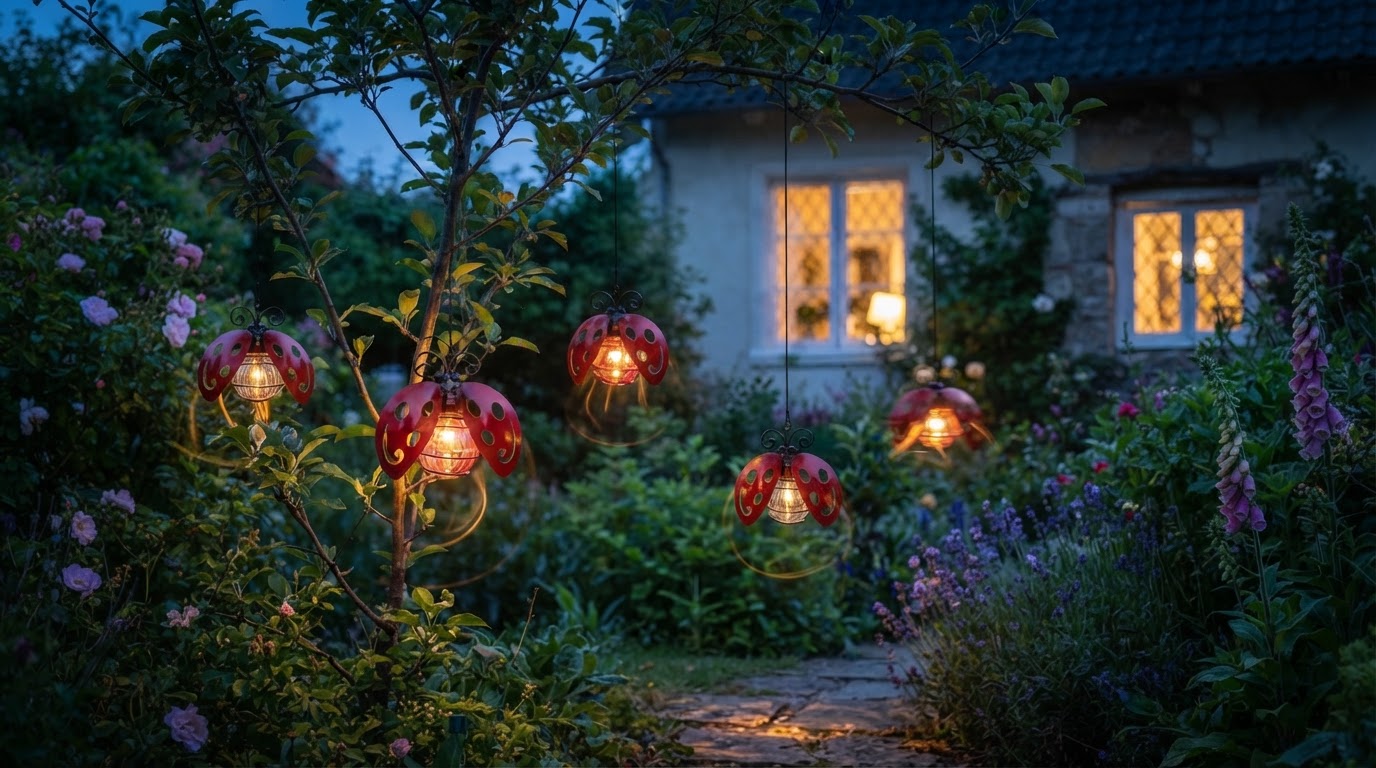
Why choose Solar Beetle Swinging Lights for whimsy?
 Sam VasquezBuying Guide Lead
September 15, 2026 — Solar Beetle Swinging Lights provide a specialized kinetic lighting effect that mimics natural insect movement, offering a distinct aesthetic advantage over static solar stakes for decorative landscaping.
Homeowners seeking a whimsical atmosphere often struggle to choose between traditional fairy lights, fixed spot lighting, and kinetic options. The decision usually hinges on whether the goal is simple illumination or the creation of a dynamic, living environment. I've found that the specific mechanical sway of these units changes the visual texture of a garden bed in ways that stationary bulbs cannot.
How do Solar Beetle Swinging Lights compare to fairy lights?
Solar Beetle Swinging Lights offer a structured, motion-based focal point that fairy lights lack, as they rely on flexible stems to catch the breeze rather than static strings draped over foliage. While fairy lights are excellent for wrapping around porch railings or tree trunks, they often become a tangled mess or lose their visual impact when hidden behind dense summer growth. In contrast, the Solar Beetle units are designed to stand above the greenery, using their height to ensure the solar panels remain unobstructed by leaves. Between these two, I'd go with the swinging beetles if you are looking to define the border of a walkway or highlight a specific flower bed, as the motion is far more noticeable than the tiny glints of a wire string. If you're on a budget, a basic string of LED fairy lights will cover more linear feet for less money, but you sacrifice the specific natural motion that defines the beetle style. Skip this if you prefer a minimalist, architectural look where the light source is completely hidden, as the beetle silhouette is a deliberate part of the design.
What makes the solar swaying light burst unique?
Technically, the uniqueness of the Solar Beetle Swinging Lights lies in the weight distribution of the "beetle" housing which allows for a rhythmic oscillation even in low-wind conditions. Most standard solar stakes are rigid; they provide a pool of light but no movement. The solar swaying light burst occurs when multiple units are grouped together, creating a synchronized yet slightly offset movement that mimics a swarm of fireflies. Here’s what I’d actually buy: I would opt for the 6-bulb or 8-bulb configurations over single-bulb stakes. The single stakes tend to look lonely, whereas the cluster creates the "burst" effect that makes the whimsical theme work. If you are integrating firefly solar garden lights into a modern landscape, the key is to place them in areas with medium-height grasses like Pennisetum or Miscanthus. The grass catches the same wind as the lights, making the motion feel integrated rather than mechanical. For those concerned about the initial installation, following a 5-step setup ensures the sensors are positioned correctly to avoid interference from streetlights, which is the most common reason these units fail to trigger at dusk.
Quick answers
Q: How much wind is needed to make Solar Beetle Swinging Lights move? A: These units are weighted to react to a light breeze of approximately 3-5 miles per hour. In completely stagnant air, they remain upright, but their flexible PVC stems allow for 360-degree movement once a breeze is present.
Q: Can Solar Beetle Swinging Lights stay outdoors during winter? A: While the IP65 waterproof rating protects against rain and snow, the battery efficiency of Solar Beetle Swinging Lights typically drops when temperatures fall below 32 degrees Fahrenheit. It is recommended to store them indoors during extreme freezes to preserve the lithium-ion battery life.
Q: How long do the lights stay illuminated on a full charge? A: Under optimal conditions with 6-8 hours of direct sunlight, Solar Beetle Swinging Lights will provide illumination for 8 to 10 hours. This duration is dependent on the age of the internal 600mAh Ni-MH battery and the cleanliness of the solar panel surface.
Learn more about Solar Beetle Swinging Lights at https://solyrabeetle.com.