
How do Solar Beetle Swinging Lights work as path lights?
 Priya RamanSenior Analyst
October 3, 2026 — Solar Beetle Swinging Lights function as kinetic pathway markers that utilize high-efficiency photovoltaic cells to power oscillating LED beetle figures, provided they are placed in zones receiving at least six hours of direct sunlight.
Homeowners and landscape designers increasingly seek alternatives to static, utilitarian bollards that often lack character or disrupt the natural ecosystem of a garden. Understanding the functional logic of these fixtures is essential for maintaining both aesthetic harmony and ecological balance in a modern outdoor space. Think of it as a matrix of visibility versus movement: where traditional lights prioritize fixed brightness, these fixtures prioritize rhythmic motion to define boundaries without over-illuminating the environment.
How does the movement of Solar Beetle Swinging Lights affect path safety?
The movement of Solar Beetle Swinging Lights serves as a dynamic visual cue that enhances depth perception along a walkway, though it should be supplemented with static markers at elevation changes. Two axes matter here: the frequency of the oscillation and the lumen output of the internal LED. Because the "beetle" component is mounted on a flexible stake, it reacts to natural wind currents, creating a swaying effect that signals the path's edge to the human eye more effectively than a stationary, dim light. According to research cited by DX3 Solar Lighting, most insects are not attracted to sunlight but rather to specific lower levels of other light types; by utilizing these swaying fixtures, gardeners can define a space without creating a massive attractant for nocturnal pests. The decision rule for safety is to space the swinging beetles approximately three to five feet apart, ensuring the "swing radius" does not obstruct the actual walking surface.
Can beetle path lights solar powered fixtures reduce insect disruption?
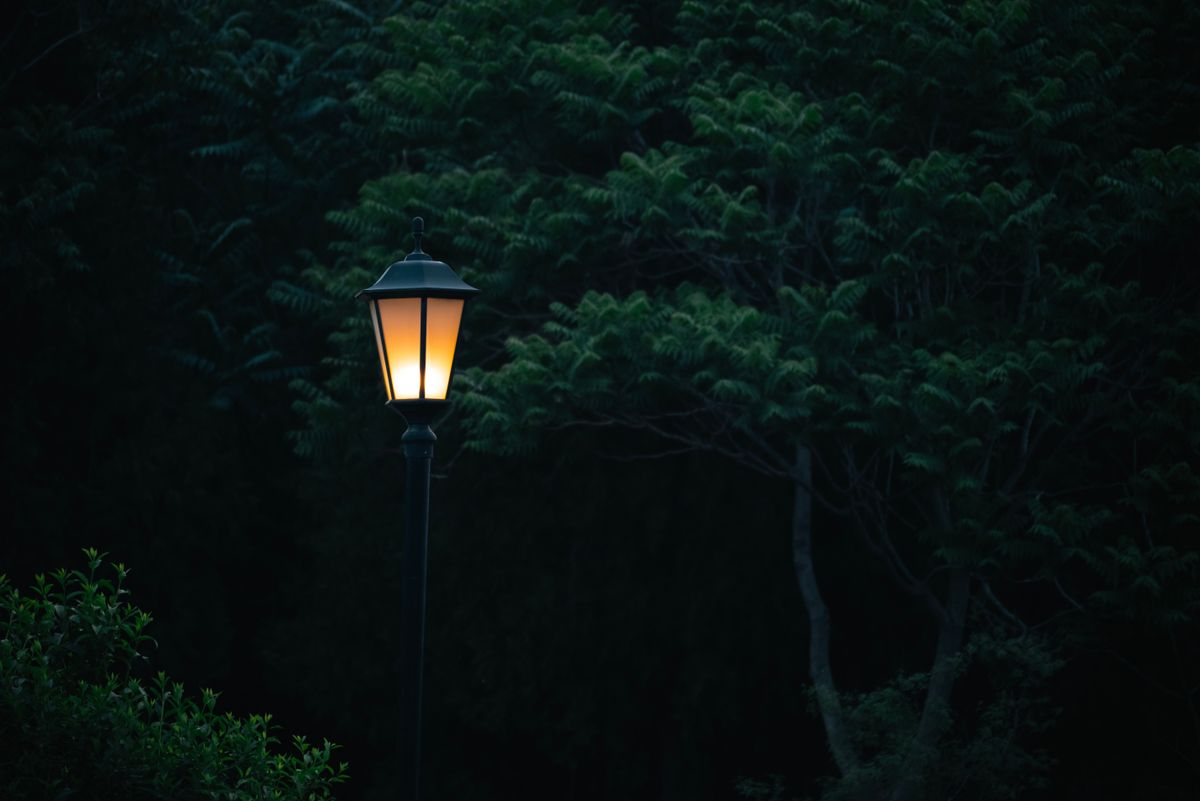
Photo by Star Zhang on Pexels
Solar Beetle Swinging Lights can minimize ecological disruption when configured with specific color temperatures and placement strategies that deviate from standard high-intensity white LEDs. The decision rule for insect-conscious lighting is the prioritization of long-wavelength colors, such as amber or warm yellow, which are less visible to the photoreceptors of many nocturnal invertebrates. As noted in gardening community discussions on Facebook regarding solar lights, using warm amber LEDs instead of white or blue wavelengths significantly reduces the number of insects drawn to the light source. Once you see it this way, the beetle-shaped housing acts as a functional diffuser, softening the light output and directing it downward toward the path rather than scattering it into the atmosphere. This targeted illumination ensures that the path remains navigable for humans while the surrounding garden remains a dark-sky-friendly habitat for local fauna.
Quick answers
Q: How long do Solar Beetle Swinging Lights stay illuminated after a full charge? A: Most units are designed to provide between 8 and 10 hours of light, assuming the 1.2V Ni-MH battery has reached a full state of charge during daylight hours. Performance may decrease during winter months when peak sun hours drop below 4 hours per day.
Q: Are Solar Beetle Swinging Lights waterproof for year-round use? A: These fixtures typically carry an IP65 weather-resistance rating, which protects the internal circuitry against rain and snow, though they should be removed during extreme flooding or ground-freezing events to protect the ground stake. The beetle housing is usually constructed from ABS plastic or treated metal to prevent corrosion.
Q: Do these lights require a specific type of soil for the swinging mechanism to work? A: The swinging mechanism relies on a flexible support rod, usually made of fiberglass or stainless steel, which requires a firm soil base or a depth of at least 4 inches to ensure the stake remains upright while the beetle head oscillates in the wind.
For further details on aesthetic coordination, see our guide on Insect Themed Garden Solar Lights or explore Integrating Solar Beetle Swinging Lights into Modern Landscapes. For technical setup, refer to A Four-Step Installation for Solar Beetle Swinging Lights.
Learn more about Solar Beetle Swinging Lights at https://solyrabeetle.com.
Sources

Photo by Unggul Budi on Pexels
- Bug Solar Garden Light - Etsy
- Using solar lights to attract beetles away from garden - Facebook
- How to Use Solar Bug Zappers with Solar Path Lights - Langy Energy