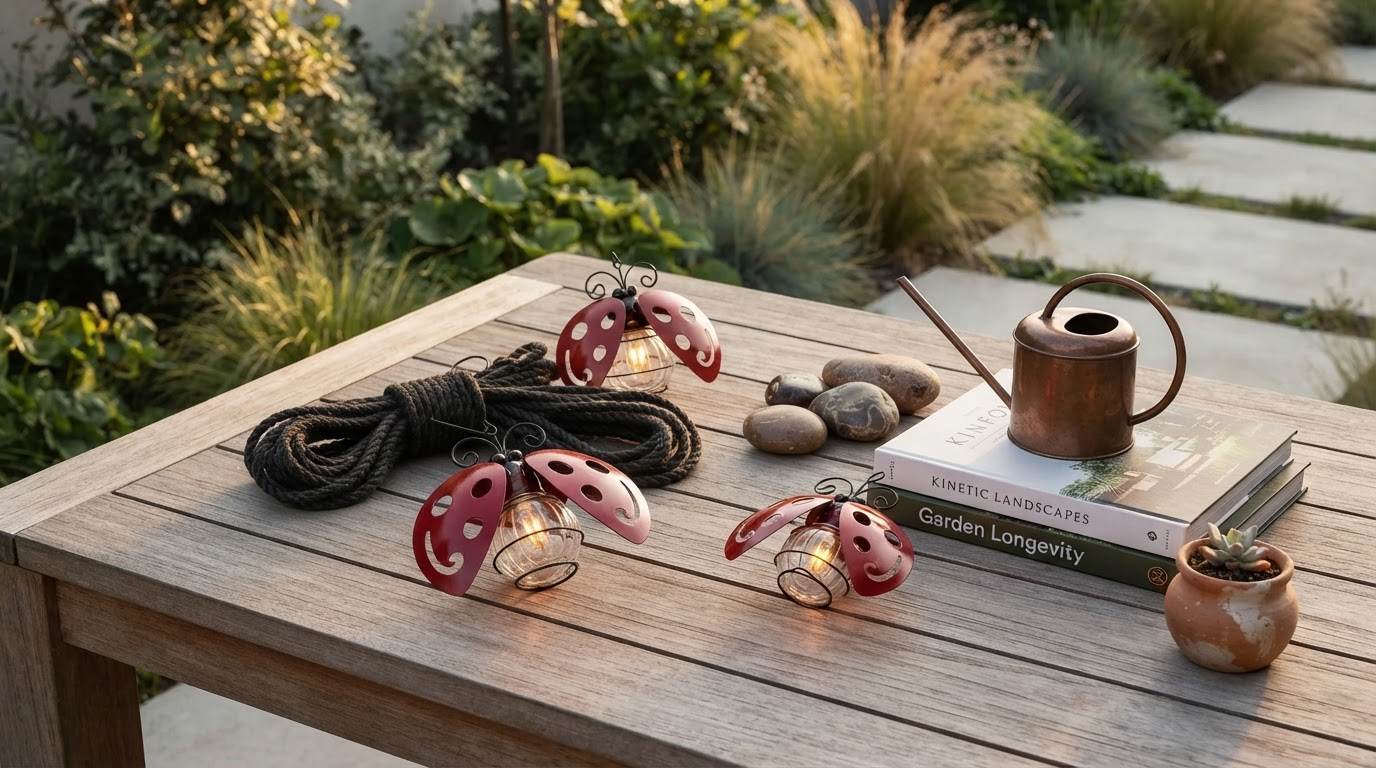
Integrating Solar Beetle Swinging Lights into Modern Gardens
 Maya ChenContributing Editor
August 1, 2026. This analysis examines the functional integration of Solar Beetle Swinging Lights within residential landscapes. It is written for homeowners seeking reliable, kinetic lighting solutions that prioritize structural longevity over temporary aesthetic trends.
The Limitations of Static Garden Illumination
The conventional wisdom says that garden lighting should be stationary to provide a predictable safety perimeter. However, this approach ignores the natural movement of outdoor spaces and often results in a sterile, static environment that feels disconnected from the local ecology. Static fixtures frequently suffer from 'hot spotting'—concentrated areas of light that ruin night vision—while leaving the rest of the yard in deep shadow. Data from a community review on Solar Bug Lights for Outdoor Garden Decoration suggests that durability is the primary failure point for most novelty lighting; users noted that while they frequently purchased 'back ups,' the original units often lasted two to three years before requiring replacement. This indicates a significant gap between the expected lifespan of decorative solar units and the reality of hardware exposure. When planning a layout, many consumers mistakenly group beetle garden decor solar powered items in high-traffic zones where they are prone to mechanical damage, rather than utilizing the swaying motion to create depth in perimeter foliage. The problem isn't just the light output; it is the failure of static fixtures to adapt to wind-driven movement, which often leads to rigid stems snapping under moderate environmental stress.
Kinetic Efficiency and Photovoltaic Performance
Photo by quang vinh on Pexels
Solar Beetle Swinging Lights address these structural failures by utilizing a flexible stem design that converts wind energy into visual motion without compromising the electrical circuit. Unlike rigid beetle garden stakes solar that resist wind pressure, these swaying units move with the air, reducing the torque applied to the ground anchor. Here's the part nobody talks about: the swaying motion actually improves the light's visibility in dense shrubbery. A stationary light can be easily obscured by a single leaf, but a swaying light constantly shifts its position, ensuring the beam breaks through the canopy. According to product documentation on eBay regarding solar bug lights, these units are designed to charge during daylight hours and provide 6 to 8 hours of illumination post-dusk. This duration is sufficient for most residential needs, provided the photovoltaic panel is not shaded by the very plants it is meant to illuminate. The integration of swinging ladybug solar lights alongside beetle variants allows for a varied kinetic profile, as different weights and surface areas react differently to wind gusts. By utilizing solar swaying beetle landscape lights, a garden designer can create a layered effect where the foreground and background move at different frequencies, mimicking the natural movement of insects in a field. This is a significant upgrade over traditional 'firefly' lights, which often lack the weight necessary to maintain a consistent swing pattern in light breezes.
Technical Deployment and Selection Framework

Photo by Unggul Budi on Pexels
Choosing the right placement for Solar Beetle Swinging Lights requires more than just aesthetic preference; it requires an understanding of solar exposure and wind corridors. I'll change my mind when a static light can demonstrate the same level of perimeter depth as a swaying fixture, but until then, the kinetic model is superior for large-scale landscaping. As noted in a demonstration of Solar Firefly Yard Lights, these units are particularly effective when placed around driveways or sidewalks where the motion serves as a subtle visual cue for boundaries. When selecting these units, prioritize the following technical criteria:
- Stem Flexibility: Ensure the wire or composite material has a high fatigue limit to prevent snapping during high-wind events.
- Panel Orientation: The solar collector must be adjustable or positioned at a 30-45 degree angle toward the south to maximize photon capture.
- Weight Distribution: The 'beetle' housing must be heavy enough to provide momentum for the swing but light enough to be moved by a 5 mph breeze.
- IP Rating: Look for a minimum of IP65 water resistance to ensure the internal circuitry survives heavy rain and irrigation cycles.
- Battery Capacity: Confirm a minimum of 600mAh Ni-MH battery storage to sustain the 8-hour runtime promised in technical specs.
- Mounting Depth: The stake must be long enough to be driven at least 4 inches into the soil to provide a stable fulcrum for the swaying motion.
Shop Solar Beetle Swinging Lights here